Author Archives: Sophie Whiptank - aka Bart

Unknown's avatar

About Sophie Whiptank - aka Bart

I'm just a bloke doing some stuff, the more interesting bits I post on my blog. Scroll down far enough and you'll see me riding from Melbourne Australia to Birmingham, England in 2014. But now I'm working on another project, a single cylinder motorbike engine at 2750cc!

Test bench.

Standard

So my trusty bench is going to become a test bench, for real! Nick asked whether the new gearbox would fit on the Churchill lathe. His idea is to make the control electronics and troubleshoot now, rather than when it’s all together in the bike frame. Makes sense to me.

However, while it’ll just about fit (the Churchill has a 12" throw) I don’t want to tie up such a useful machine for any length of time. A quick call to Matt and a spare motor was dropped round a few minutes later! Got to love having a good engineering mates community:-)

The motor is flange mounted and happens to rotate the same way that the engine will. So, with a bit if cobbling around I should be able to make a test bench and drive the torque converter (Tc). The first thing I will be able to uncover is the direction the Tc is designed to rotate! I have a sneaking suspicion that it’s the ‘wrong’ way, i.e. opposite to the engine. Time will tell…

Sleeve drive centres final adjustment.

Standard

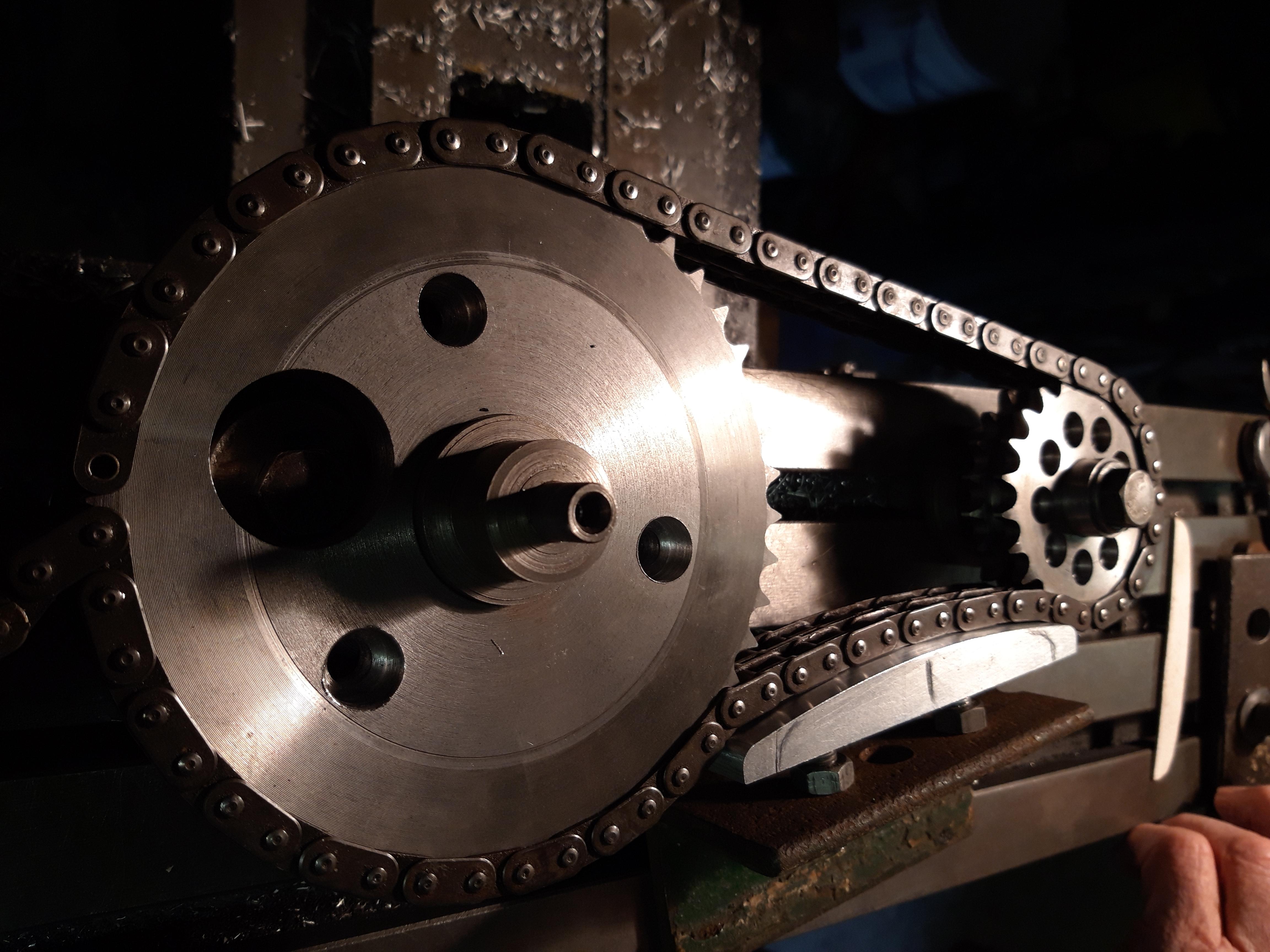
The sleeve drive sprockets are machined up and the chain fitted. The distance between centres is critical and the chain length dictates that. The distance we’re chasing is 7 inches, which the chain adjuster helps – but the critical distance unfortunately falls between links.

The engine cases will need to be bored for the bearings, so the centres can be moved to provide a small offset. However, changing the centre of the sleeve drive crank will change (raise in this case) the maximum height of the sleeve. This in turn means that the barrel will need to be raised, lowering the compression ratio.

Important to nail this now before machining the cases. I think a maximum of .1" will bring the chain length, tension and adjustment within acceptable limits.

Boxing clever

Standard

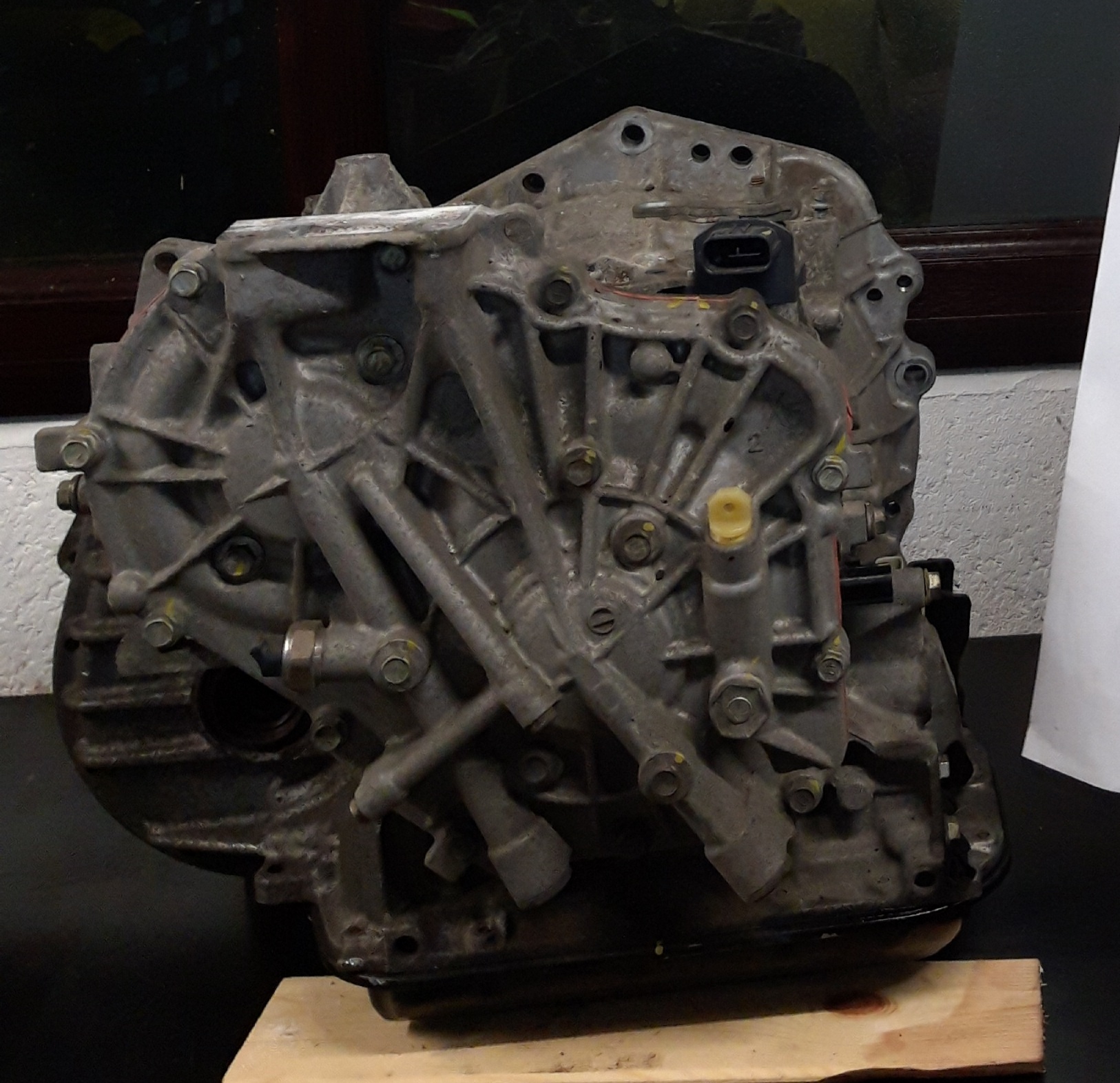
I picked up a gearbox for the project and now have a whole series of fresh challenges! The Toyota iQ box is a novel CVT, with an ECU ensuring the pulleys extend between four fixed ratios. The effect is like a 4 speed automatic, but achieved without any actual gears.

I could have taken the easy option of using a standard clutch and a brit bike or Harley box. However, if I did that anyone looking would recognize it straight away. The idea is that you look at the engine and wonder what the hell it is, and wherever else you look there are no more clues!

The fluid flywheel (on the other side) means the whole assembly is there, ready to rock. I just have to figure out how to drive it, and knock up some electronics. Easy right?? Hmm…

Planning for machining the engine cases

Standard

Planning in case??

We’ve petty much finished all of the steel components now, so Bob has been busy mulling over how we’re going to tackle machining the engine cases. While I’ve been reviewing the hand written notes and scratching my head!

It does make sense and doesn’t seem too onerous either. I just hope the patterns don’t take too long, as they’re holding us up.

Looking at transmission and after a good catchup with an old friend I’ve decided to go fully automatic. Modern small cars with CVT transmission have compact boxes presenting many options. I like the idea of not having a clutch level and cable, it will clean up the bars nicely.

Clock on…

Standard

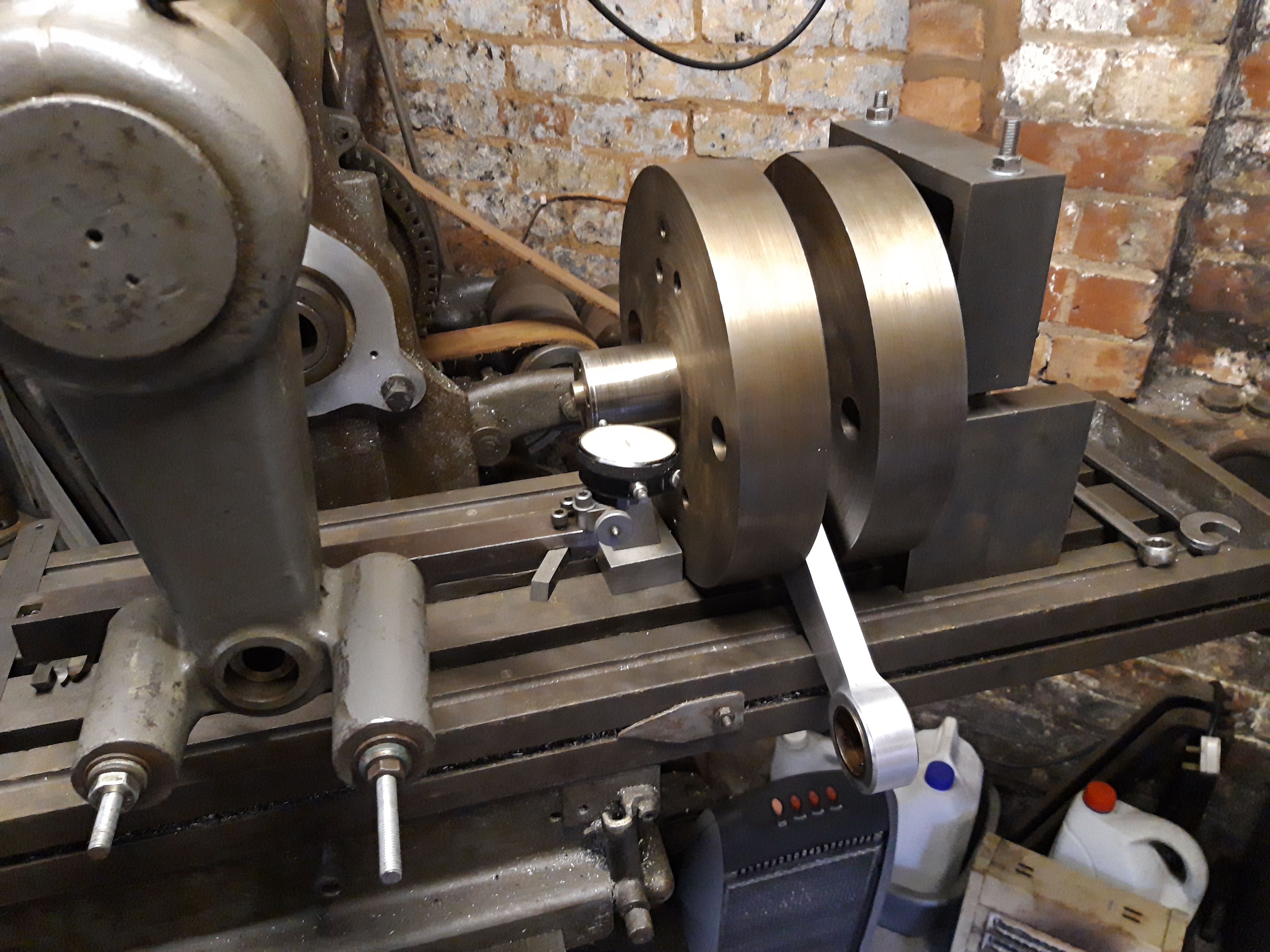
Setup for measuring the runout on the drive side. Currently out by 20 Thou, but not fully pressed home yet. Once I’ve located a large press and finished squeezing them together, the operation can be repeated and the wheels trued.

In many Brit bike factories the truing up process was done by dropping one end of the flywheel assembly onto wooden blocks. The momentum of the other flywheel would tweak it round slightly. This weighs over 50kgs so we’re having a re-think on that one!

Turning the Crank

Standard

The end of the timing side needs a shoulder putting on it due to a design change. (Clearance for the sleeve drive chain links). In order to do this the crank assembly needs to be mounted and spun, which was quite a challenge! The conrod doesn’t clear the lathe bed so it’s been suspended from the ceiling with a bungee, to allow it to move but retain some tension. It’s a full sized turning crank that gives a good idea of what’s going on inside the motor, not something you see every day!!

Setup for checking runout

Standard

When the crank has been finally pressed together, we’ll need to check the run out. Ideally this will be zero, but is something that must be checked if longevity is going to be achieved! (And I do plan on the engine lasting!).

Minor runout could be adjusted with subtle use of a mallet, or for anything more serious machining one shaft. Or even making an eccentric sleeve. But hopefully none of these will be required.

The idea of the v blocks is to mount the whole crank assembly in the bearings on the timing side. The lot can be spun by the conrod and a clock on the other side measures any runout. Easy!

Patterns with style

Standard

Dave popped round with a set of patterns he’d modified to be more in keeping with the barrel. Achieving a good look aesthetically isn’t something every pattern maker would necessarily think about. Dave’s time as a model shoe maker and designer really shows.

I like what he has done as an example and now we’re cracking on with the main items. I expect it’ll take 3-4 weeks to get something we can drop onto the drawings, then filleting and artistic flare to finish off. A bit longer than the original time estimates, but hopefully ready for casting before too long.

Chain guard

Standard

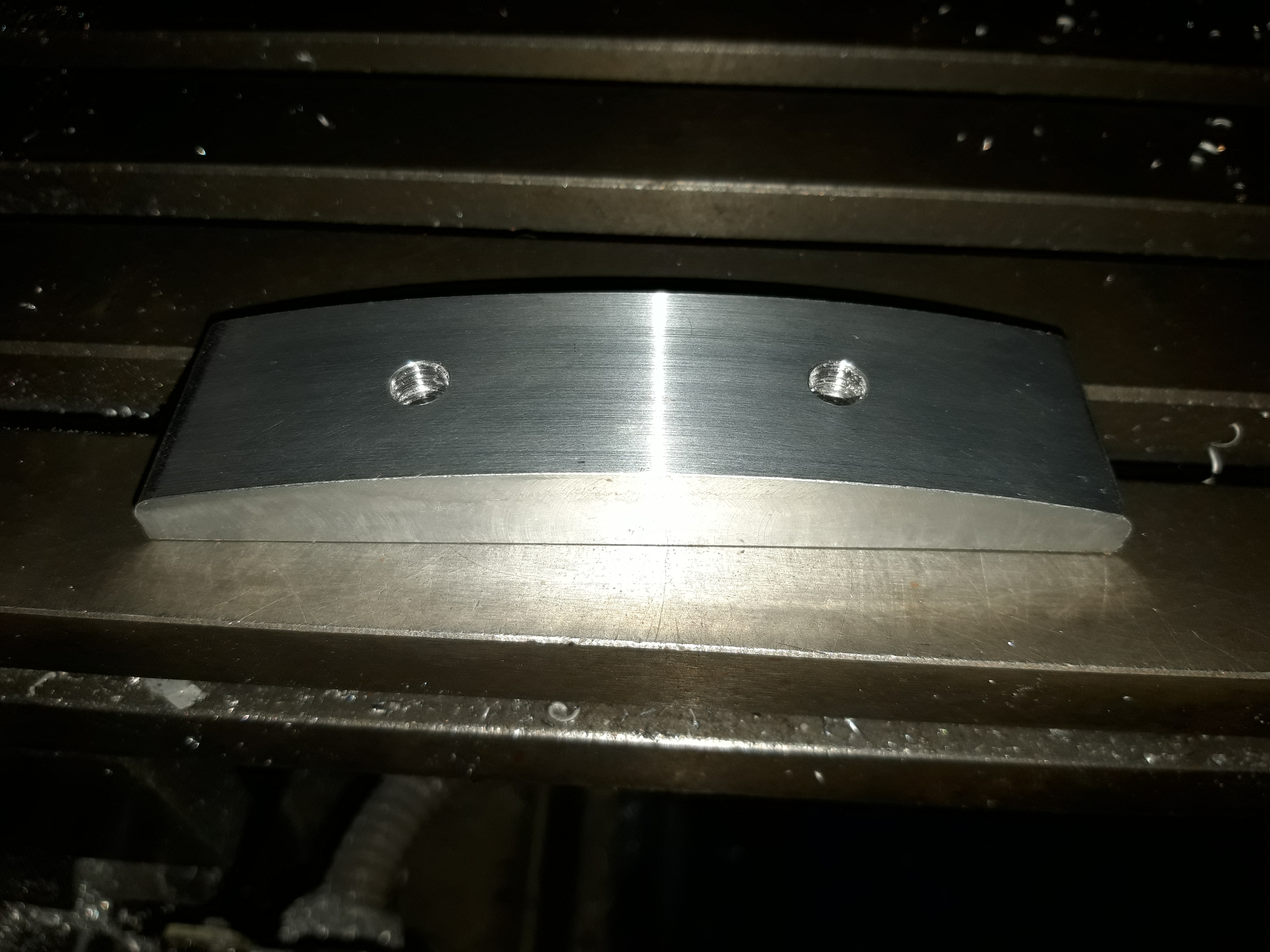
The sleeve drive will be a duplex chain, and like all chains it needs tensioning. Like old Notions the tensioner is ally, which Bob has made a great job of carving out of some leftover billet. It’s a lovely looking thing, the sort of artifact you’d pick out at an autojumble just because.

Shame no one will see it when it’s in situ! Apart from the 44T sprocket, all of the steel components are finished. Time to give Dave a nudge about finishing those patterns!